Experts explain why cleaning your smartwatch and other everyday items is essential to keep your surroundings germ-free.
Your Smartwatch and 9 Other Everyday Items You Aren’t Cleaning Enough

Experts explain why cleaning your smartwatch and other everyday items is essential to keep your surroundings germ-free.

This QD-OLED monitor with an excellent burn-in warranty is $950 — over 40% off — during Amazon’s Big Spring Sale.

New York City-based Betaworks has closed its $66 million Fund III, which will focus on investing in early-stage AI companies.
Betaworks has been investing in AI since at least 2016 and, through its investment program Camp, has backed companies such as Huggingface and Granola. Jordan Crook, a partner at the firm (and former TechCrunch employee), said the new fund will focus on agents, native AI interfaces, and application-layer AI.
“Around these themes, we will continue to do straight seed investing and the Betaworks Camps,” Crook said.
Fund III will seek to invest in at least 25 pre-seed to seed investments, as well as make at least 50 investments into startups as part of the Betaworks Camps program. “Thus far, we’ve done around 37 deals,” Crook said, adding that the average check size was around $500,000.
Crook called the current fundraising environment “frothy” for startups, and “spiky” for funds, but she noted that Fund III saw many of the firm’s previous limited partners returning to invest.
“The fundraising environment in venture was challenging in 2024, and we weren’t exempt, given that we were upsizing our fund,” she said.
Betaworks previously raised a $46 million Fund II in 2020, and a $48 million Fund I in 2016. It launched in 2008 as a venture studio, and has since become a staple in the New York City tech ecosystem, launching its Betaworks Camps program in 2016. The firm’s other notable investments include Tumblr and Kickstarter.
Techcrunch event
San Francisco
|
October 27-29, 2025
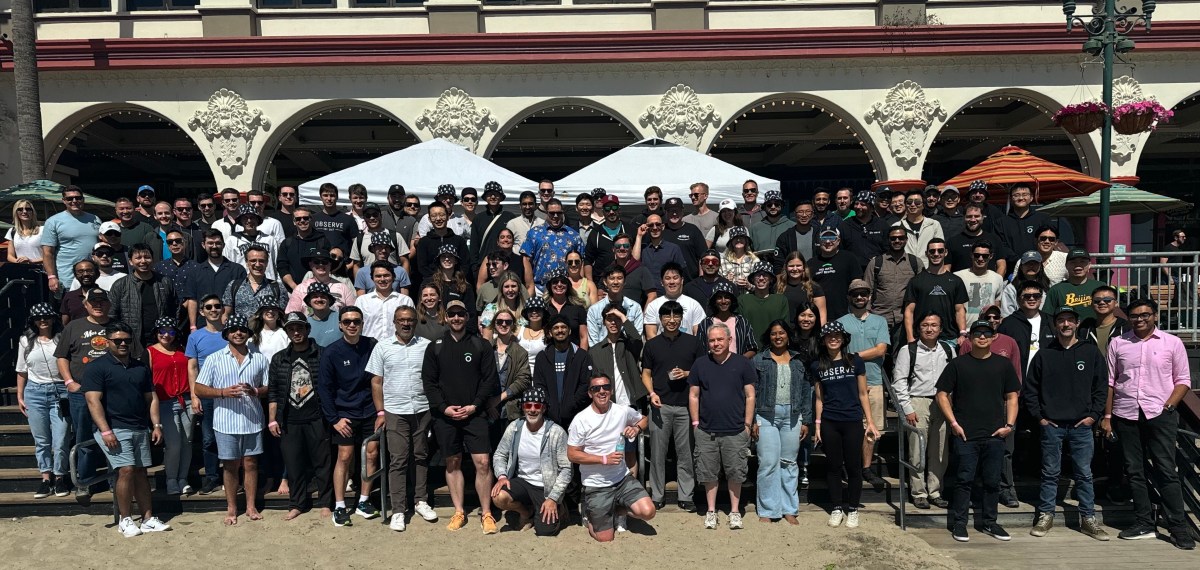
Observe, an observability platform, was founded in 2017 in response to the changing nature of software observability. Companies started pushing out new versions of their software more frequently — and producing significantly more data because of it.
Now, Observe is responding to the latest big shift in technology: AI.
San Mateo-based Observe helps companies get an inside look at the status of their software, which makes it easier for engineers to spot and solve disruptions and outages.
The recent advancements in AI are both a blessing and a burden for the company. Observe’s observability product incorporates AI agents to help make finding and fixing issues faster for its customers. But advancements in AI mean companies are shipping software even faster than before and seeing their data balloon because of it.
CEO Jeremy Burton told TechCrunch that with the continual advancement of AI agents, observability continues to get more complex.
“In a few years, you’re going to have hundreds or thousands of agents on your network that are all interacting with employees or interacting with each other,” Burton said. “That’s all great until something goes wrong, and you’ve got to try and, you know, do a Sherlock Holmes and figure out who done it, you know?”
But Observe is adapting to how the industry is changing, Burton said. The company released a Model Context Protocol (MCP) server earlier this year that allows developers to access their observability data from AI coding tools and LLMs. This is to help meet developers where they are already working, Burton said, and help them accomplish tasks easier.
Techcrunch event
San Francisco
|
October 27-29, 2025
“We have customers already that are using the MCP server and really trying fairly radical workflows,” Burton said. “They’re sitting in their development environment, and they say, ‘Hey, take a look at this ticket. Use Observe to go figure out what’s happening, and then describe to me the code that you think is problematic, and then suggest the effects.’ That would have been in the realm of science fiction even a year ago.”
The company is also working toward supporting Apache Iceberg, an open source data table format that allows businesses to own and standardize their own data. Burton said companies really like that approach, and Observe expects to be able to support that format by the end of the year.
The company’s revenue nearly tripled in 2024, and it saw 93% gross retention of its customers, although Burton declined to share specific numbers. The company counts large enterprises, including CapitalOne, Paramount, and Dialpad, as customers.
Observe raised $156 million in a Series C round led by Sutter Hill Ventures with participation from Madrona Ventures, Alumni Ventures, and strategic investors like Snowflake, among others.
The company will put the capital toward research and development and hiring. Observe hopes to roll out its private preview for Apache Iceberg support shortly.
“We’ve got a couple of really good things out there, but I feel like we’ve just gotten started,” Burton said.