Ahead of Galaxy Unpacked, Samsung tells CNET what’s in store for its upcoming foldables — and why it’s making some key design changes.
‘Feeling Is Believing:’ Samsung Shares Exclusive Details About Its Super Slim Galaxy Z Fold 7

Ahead of Galaxy Unpacked, Samsung tells CNET what’s in store for its upcoming foldables — and why it’s making some key design changes.

After two years as a venture capitalist for top-shelf firm Benchmark, Victor Lazarte is leaving that company to start his own investing gig, he announced on X on Thursday.
Lazarte became known in tech for co-founding mobile gaming company Wildlife Studios, which was last valued at an estimated $3 billion in 2020. Wildlife raised money from a multitude of VCs, including Benchmark.
During his two years at Benchmark, Lazarte invested in recruiting and data labeling startup Mercor, AI video intelligence platform HeyGen, and AI infrastructure company Decart AI.
Lazarte is leaving Benchmark to “build a new investment practice,” he wrote in the post. He had recently informed his portfolio companies about his plans to leave Benchmark, according to a source.
Lazarte is the second investor to step down from Benchmark’s partnership this year. Sarah Tavel announced in April that she is transitioning to a venture partner.
After Lazarte’s departure, remaining partners at the storied firm include Peter Fenton, Eric Vishria, and Chetan Puttagunta.
Unlike most VC firms, where senior partners typically receive a greater share of management fees and profits, Benchmark operates as an equal partnership, with all general partners dividing fees and returns equally. Benchmark and Lazarte did not immediately respond to our request for additional comment.
Techcrunch event
San Francisco
|
October 27-29, 2025
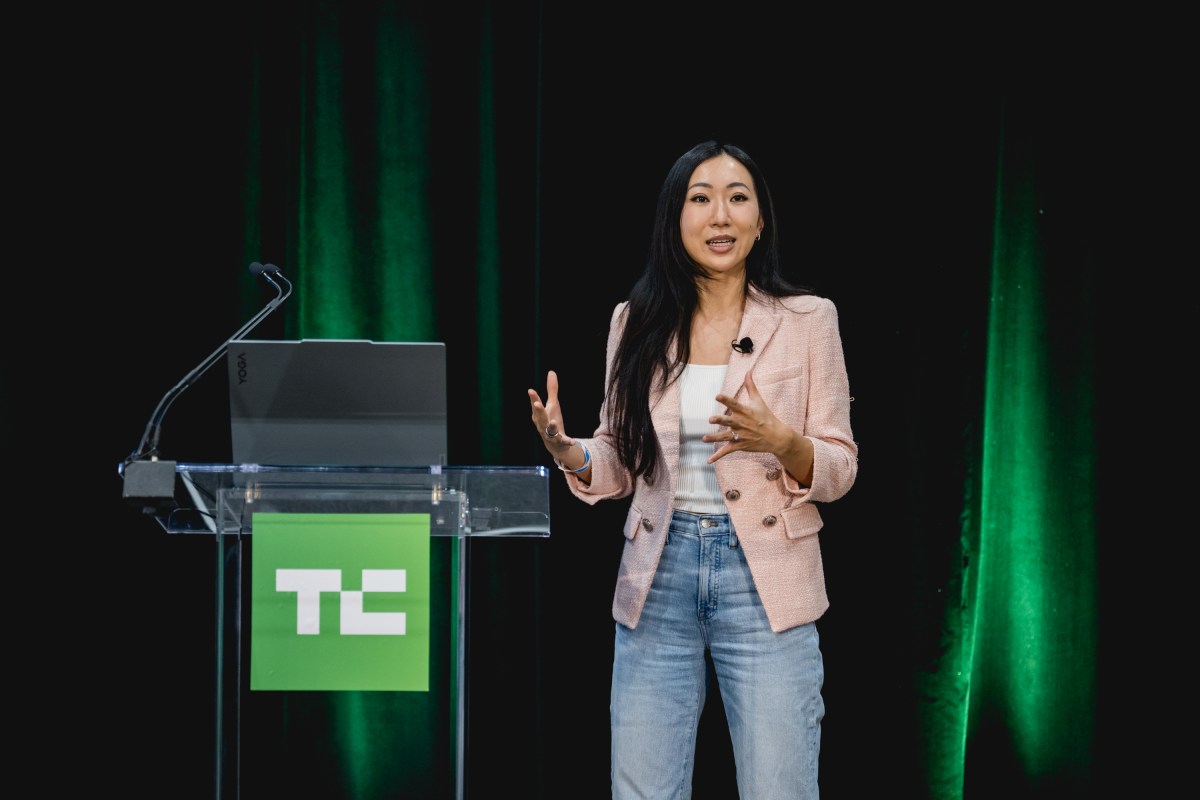
Startup founders face a perplexing and even contradictory capital market in 2025, according to Sapphire Ventures partner Cathy Gao. “Capital isn’t scarce. But access to that capital is harder than ever,” she said.
Gao, who spoke at TechCrunch’s All Stage conference in July, said it’s possible for startup founders, especially those in later Series C stage, to navigate this particular economic environment. And they need to start with a reality check.
To begin, she said, it’s important to note that only one in five startups that raise a Series A ever make it to raise a Series C. And, in the past year, the bar for raising late-stage capital has only risen; investors are no longer just chasing momentum, as many were in the last few years — they are chasing certainty, Gao said.
“Investors are now asking: ‘Is this company truly a winner in whatever market that they’re serving?’” Gao said. “The question really isn’t, ‘is this company growing?’ The question has shifted to, ‘is this company on a trajectory where the upside is really undeniable?’”
Companies raising Series C rounds should meet certain criteria. For one, they’re all category leaders, according to Gao.
“They’re defining their categories. They have clear go-to-market and undeniable pull,” she said. “In short, they’re growing efficiently, but there’s also traction to show that these are truly the market leaders in the spaces that they operate in.”
Companies looking to raise a Series C should also remember that metrics do not always equal money. Sure, metrics are important, as are annual returns, growth, and retention, she said, but if investors are not sold on the idea that a company can truly become a leader in their respective space, then they are going to move on.
Techcrunch event
San Francisco
|
October 27-29, 2025
“Investors have to explain why a company will win in the future,” she continued. For example, there are companies that don’t have amazing metrics yet somehow raise a suitable Series C round. In one case, a startup nabbed more than a $2 billion valuation, she noted. “They were effectively able to communicate the story to investors why this company will be a leading company over time,” Gao said of the company’s successful raise.
Another Gao rule: continuity is better than short-term virility.
In the age of AI, companies are growing faster than investors have ever seen before, she noted. “But oftentimes it’s the case, what goes up also sharply comes down,”Gao said. “So the question is, ‘is this growth sustainable?’”
In a Series C, investors are looking for “compounding loops,” or seeing that the company gets stronger as it scales, she said.
“Does your product get better for every new customer you sign? Does your CAC [customer acquisition cost] decrease or increase for every new user you bring on board?,” she asked.
If the answer is yes, then investors will “lean in,” Gao said; if the answer is “no,” then investors are most likely to “lean out,” even if a company’s metrics look very strong.
Finally, she said, founders should treat fundraising like a go-to-market campaign and seek to develop relationships with VCs before pitching them for capital. Gao cited her firm as an example. Sapphire likes to invest in a company at the Series B level, but they usually have known the company for a year or longer.
“That means at the Series A, even though we’re not actively leaning in to try and raise, we’re trying to build a relationship with a company and with the founder,” she said. “We’re getting information and we’re developing a longitudinal picture of how this company has progressed.”
She said founders should start building a “lightweight investor CRM,” or a database managing the relationships with investors.
Investors take notes while meeting with founders, and founders should do the same, she said. Founders should write down the names of partners, what they like to invest in, and what companies they’ve backed recently. Create a distribution list and send out periodic updates to the investors on it, she said. “This is an easy way to keep inventors in the loop.”
Perhaps most importantly, however, Gao noted that a company looking to raise a Series C should not enter a fundraise until they’ve received a signal from multiple firms that they’re interested in backing the round.
“The last thing you want to do is time the market incorrectly,” she said. After all, timing is everything at the Series C level. “It’s not about luck, pitching to a 50 and hoping that one says yes,” she continued. “It’s really about timing and planning ahead.”

One of US President Donald Trump’s first actions upon returning to power was ordering the Gulf of Mexico to be…