Auto-brightness is supposed to make life easier, but sometimes it adjusts your screen at the worst possible time. Turning off these iPhone settings can fix that.
If Your Phone’s Auto-Brightness Is Irritating You, Adjust These Settings Now

Auto-brightness is supposed to make life easier, but sometimes it adjusts your screen at the worst possible time. Turning off these iPhone settings can fix that.

Keeping the house mouse-free feels like a full-time job in winter. We asked a rodent expert about the best ways to keep them out in the first place.

Hackers are targeting a previously reported bug in the Signal clone app TeleMessage in an effort to steal users’ private data, according to security researchers and a U.S. government agency.
TeleMessage, which earlier this year was revealed to be used by high-ranking officials in the Trump administration, already experienced at least one data breach in May. The company markets modified versions of Signal, WhatsApp, and Telegram for corporations and government agencies that need to archive chats for legal and compliance reasons.
On Thursday, GreyNoise, a cybersecurity firm with visibility into what hackers are doing on the internet thanks to its network of sensors, published a post warning that it has seen several attempts to exploit the flaw in TeleMessage, which was originally disclosed in May.
If hackers are able to exploit the vulnerability against their targets, they could access “plaintext usernames, passwords, and other sensitive data,” according to the firm.
“I was left in disbelief at the simplicity of this exploit,” GreyNoise researcher Howdy Fisher wrote in a post analyzing the flaw. “After some digging, I found that many devices are still open and vulnerable to this.”
According to the researcher, exploiting this flaw is “trivial,” and it seems that hackers have taken notice.
Contact Us
Do you have more information about these attacks? Or about TeleMessage? We’d love to hear from you. From a non-work device and network, you can contact Lorenzo Franceschi-Bicchierai securely on Signal at +1 917 257 1382, or via Telegram and Keybase @lorenzofb, or email.
In early July, U.S. cybersecurity agency CISA listed the flaw — designated officially as CVE-2025-48927 — to its catalog of Known Exploited Vulnerabilities, a database that collects security bugs that are known to have been exploited by hackers.
In other words, CISA says hackers are successfully exploiting this bug. At this point, however, no hacks against TeleMessage customers have been publicly reported.
In May, TeleMessage, which at that point was a little-known alternative to Signal, became a household name after then-U.S. National Security Advisor Mike Waltz accidentally revealed he was using the app. Waltz had previously added a journalist to a highly sensitive group chat with other Trump administration officials, where the group discussed plans to bomb Yemen, an operational security snafu that caused a scandal leading to Waltz’s ousting.
After TeleMessage was identified as the app Waltz and others in the administration used to communicate, the company was hacked. Unknown attackers stole the contents of users’ private messages and group chats, including from Customs and Border Protection, and the cryptocurrency giant Coinbase, according to 404 Media, which first reported the hack.
TeleMessage did not immediately respond to a request for comment.
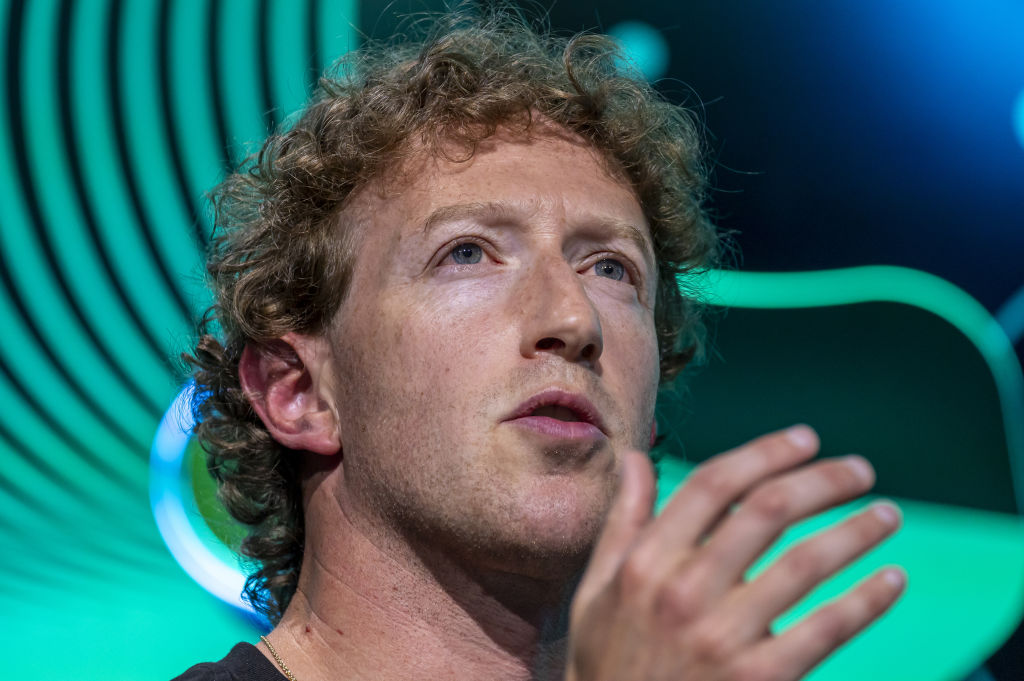
Meta CEO Mark Zuckerberg shared his vision on Wednesday for “personal superintelligence,” the idea that people should be able to use AI to achieve their personal goals.
Smuggled into the letter is a signal that Meta is shifting how it plans to release AI models as it pursues “superintelligence.”
“We believe the benefits of superintelligence should be shared with the world as broadly as possible,” wrote Zuckerberg. “That said, superintelligence will raise novel safety concerns. We’ll need to be rigorous about mitigating these risks and careful about what we choose to open source.”
That wording about open source is significant. Zuckerberg has historically positioned Meta’s Llama family of open models as the company’s key differentiator from competitors like OpenAI, xAI, and Google DeepMind. Meta’s goal has been to create open AI models that were as good as or better than those closed models. In a 2024 letter, Zuckerberg wrote, “Starting next year, we expect future Llama models to become the most advanced in the industry.”
Zuckerberg has previously left himself room to maneuver on this commitment. “If at some point however there’s some qualitative change in what the thing is capable of, and we feel like it’s not responsible to open source it, then we won’t,” he said in a podcast last year.
And while many say Llama doesn’t fit the strict definition of open source AI — partly because Meta hasn’t released its massive training datasets — Zuckerberg’s words point to a possible change in priority: Open source may no longer be the default for Meta’s cutting-edge AI.
There’s a reason why Meta’s rivals keep their models closed. Closed models give companies more control over monetizing their products. Zuckerberg pointed out last year that Meta’s business isn’t reliant on selling access to AI models, so “releasing Llama doesn’t undercut our revenue, sustainability, or ability to invest in research like it does for closed providers.” Meta, of course, makes most of its money from selling internet advertising.
Techcrunch event
San Francisco
|
October 27-29, 2025
Still, that stated viewpoint on open models was before Meta started to feel like it was falling behind competitors, and executives became obsessed with beating OpenAI’s GPT-4 model while developing Llama 3.
Cut to June 2025, when Meta began its public AGI sprint in earnest by investing $14.3 billion in Scale AI, acquiring Scale’s founder and CEO, and restructuring its AI efforts under a new unit called Meta Superintelligence Labs. Meta has spent billions of dollars to acquire researchers and engineers from top AI firms and build out new data centers.
Recent reports indicate that all that investment has led Meta to pause testing on its latest Llama model, Behemoth, and instead focus efforts on developing a closed model.
With Zuckerberg’s mission for introducing “personal superintelligence” to the world — a decided shift from the rivals he says are working on “automating all valuable work” — his AI monetization strategy is taking shape. It’s clear from Zuckerberg’s words today that Meta plans to deliver “personal superintelligence” through its own products like augmented reality glasses and virtual reality headsets.
“Personal devices like glasses that understand our context because they can see what we see, hear what we hear, and interact with us throughout the day will become our primary computing devices,” Zuckerberg wrote in Wednesday’s letter.
When asked about Meta potentially keeping its most advanced models closed, a Meta spokesperson said that the company remains committed to open source AI and said it also expects to train closed source models in the future.
“Our position on open source AI is unchanged,” a spokesperson said. “We plan to continue releasing leading open source models. We haven’t released everything we’ve developed historically and we expect to continue training a mix of open and closed models going forward.”
This article was updated with more information about Mark Zuckerberg’s stance on open AI models.