Pod coffee makers are a convenient way to get caffeinated. These are our favorites.
7 Best Coffee Pod Machines (2025), Tested and Reviewed

Pod coffee makers are a convenient way to get caffeinated. These are our favorites.
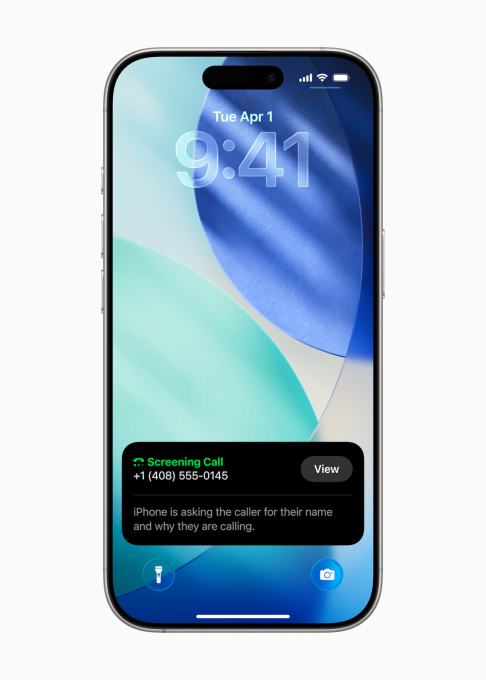
Apple released the first public beta of its new mobile operating system, iOS 26, featuring its “Liquid Glass” user interface and improved AI features. The release allows early adopters to get their hands on Apple’s latest software before its wider public availability later this fall.
The update represents the most notable visual transformation since iOS 7, featuring a “Liquid Glass” design that offers a more transparent, glass-like feel to user interface elements, like buttons, screens, and in-app navigation and controls, among other things. Liquid Glass is integrated throughout iOS 26, including in key apps like Phone, Camera, Safari, Music, and others, as well as in notifications, the Lock Screen, Control Center, and the Home Screen.
The software update also includes an updated Lock Screen for iPhone and iPad with a 3D photo effect and dynamic clock and updated app icons, which users can now set to clear, too.
In terms of AI features, the new software brings a live translation feature that translates conversations in real-time, AI-powered shortcuts, poll suggestions in Messages, and an update to Visual Intelligence for conducting image searches as you browse.
Other software versions, including iPadOS 26, macOS 26, tvOS 26, and watchOS 26, have also adopted the Liquid Glass design.
Here is a brief overview of all the new features being introduced.
iOS 26
Image Credits:Apple
In addition to the glass aesthetic, iPhone users have several updates to be excited about, including a dedicated gaming app that serves as a new destination for playing and discovering games in one place.
Techcrunch event
San Francisco
|
October 27-29, 2025
The Phone app is introducing a new Call Screening feature that prompts unknown callers to state their name and reason for calling before the recipient answers. Additionally, a Hold Assist feature will notify users when hold music ends, signaling that they can speak to a live agent. The app, along with Messages and FaceTime, will also support real-time live translations. In the Messages app, meanwhile, users can expect a feature that has AI-generated suggestions for polls.
iOS 26 will also bring updates to Genmoji and Image Playground, as well as improvements to Camera, Photos, Maps, and a range of other minor additions, including the ability to customize alarm snooze times.
iPadOS 26
Image Credits:Apple
A big win for iPad users is that they’ll experience a more Mac-like tablet. For example, iPadOS 16 is bringing the Preview app from macOS, which enables annotation on PDFs. Plus, a new windowing system that lets users adjust the size of web pages and apps, as well as manage multiple windows and tabs at once.
MacOS Tahoe 26
One notable update for macOS 26 involves Spotlight, which will employ AI to anticipate user searches and suggest actions based on frequently performed tasks or ongoing projects. Additionally, macOS is gaining Live Activities, allowing users to sync activities directly with their iPhones and access recent calls and contacts.
watchOS 26
Image Credits:Apple
One of the more significant features coming to the new watchOS is Workout Buddy, a fitness assistant powered by Apple Intelligence that provides motivation using a generative voice during workouts, pointing out key moments like closing the Exercise ring for the day.
Apple has also revamped the Workout app, introducing a helpful new option called Autoplay Media. This feature automatically starts playing music, podcasts, and audiobooks. Additionally, Apple Music can intelligently recommend the most suitable playlists for your workouts and will recall listening habits for each type of exercise.
Another update is the automatic volume adjustment capability, which adjusts the volume of calls, timers, alarms, and Siri to match the surrounding sound levels, ideal for quiet places like libraries.
Apple also introduced a new one-handed flick gesture that’s designed to dismiss notifications, silence incoming calls, and return to the watch face, among other actions.
tvOS 26
Image Credits:Apple
Arguably, the most useful new feature coming to Apple’s TV operating system is the ability to switch profiles seamlessly. Users can easily select their profile as soon as the Apple TV wakes from sleep, allowing them to quickly resume their viewing experience.
Apple Music introduced a fun feature that enables users to use their iPhones as microphones for sing-alongs, complete with on-screen lyrics displayed on the TV. Multiple iPhones can connect at once, making it possible for friends and family to join in, queue songs, and even send emoji reactions.
Additionally, new Contact Posters for FaceTime allow users to showcase customized photos and names, personalizing the experience. Another notable update includes the expansion of Live Captions to support translations in languages such as French, German, and Spanish.

Contract review remains a slow, manual process that strains legal teams, forcing lawyers to sift through dense language, flag risks, and translate legal terms.
In fact, the problem is so prevalent that for the past several years, Tokyo-based LegalOn Technologies has had an open door to that market: its AI contract review software for legal teams is today used by 7,000 organizations across Japan, the U.S. and the U.K., the company claims, and it leads the Japanese market, with 25% of all public companies in the country using its platform.
LegalOn’s AI contract review tool, Review, identifies risks and suggests edits based on playbooks built by lawyers, and each customer’s legal standards. The company claims Review cuts review times by up to 85% while improving quality and accuracy.
Success hasn’t tempered LegalOn’s ambitions, however. The company now wants to further build out AI agent tools to go along with its software, and recently raised $50 million to do just that.
The Series C funding round is being led by Goldman Sachs’ growth equity fund, and saw participation from existing investor World Innovation Lab (WiL). New investors Mori Hamada & Matsumoto (a law firm in Japan), Mizuho Bank, and Shoko Chukin Bank also invested.
While a lot of the new cash is being dedicated to developing more AI agent products, the company is also enhancing its go-to-market efforts in the U.S. and U.K., where it says its business has quadrupled over the past year.
LegalOn declined to disclose its valuation.
Techcrunch event
San Francisco
|
October 27-29, 2025
Founded by two former corporate lawyers, Nozomu Tsunoda and Masataka Ogasawara in 2017, LegalOn aims to address time-consuming tasks before and after the contract review process, such as organizing legal requests and automating contract management.
According to Daniel Lewis, Global CEO of LegalOn, the company stands out from the hordes of legal tech startups using AI thanks to its foundation in attorney-drafted, expert legal content. That base, he says, makes LegalOn unlike other tools that rely on users to build rules from scratch, or use generic AI models that lack the precision required for legal work.
“Our approach ensures contract reviews are aligned with real legal standards, making the output more accurate, consistent, and practical for legal teams. In addition, we have more than 50 attorney-built playbooks, seamless integration into existing workflows, and our solution works out-of-the-box on day one,” Lewis said.
Just last week, the startup launched another tool: Matter Management helps legal teams track contract requests, assign owners, connect matters to relevant people and documents, and collaborate with other departments.
The company has also struck a non-equity tech partnership with OpenAI, which gives LegalOn access to the ChatGPT maker’s advanced large language models.
“It’s a technical collaboration,” Lewis explained. “It gives us early access to their latest models, and it positions our engineers to work kind of side-by-side with engineers from OpenAI. So in that regard, it will advance our goal of building cutting-edge [AI] agents using great technology, but being able to ground that in our proprietary legal content and expertise.”
The AI revolution is proving to be a massive tailwind for legal tech startups worldwide. In June, Harvey AI secured $300 million in Series E funding, pushing its valuation to $5 billion, and last year, Clio also raised $300 million, reaching a $3 billion valuation.
But even as generative AI transforms the legal industry, Lewis doesn’t think it will replace lawyers. “The state of the technology isn’t there yet, and replacing lawyers isn’t even our vision,” he said. “Lawyers are still in the driver’s seat. The things AI can’t do perfectly today are, by definition, the things only people can do. And the lawyers who lean into that responsibility — to oversee, to edit, to exercise judgment — are the ones seeing the most extraordinary leverage from AI right now.”
The Series C brings LegalOn’s total capital raised to over $200 million. Its investors include SoftBank Vision Fund, HSG (formerly known as Sequoia Capital China), Japanese venture capital firm JAFCO, and MUFG Bank.

Samsung’s next Galaxy S25 model will be a thinner device set to arrive later in 2025.