Stone Mountain offers a range of internet options, from fast fiber to wireless home internet. Here’s how top providers like AT&T Fiber, Xfinity and T-Mobile compare.
Best Internet Providers in Stone Mountain, Georgia

Stone Mountain offers a range of internet options, from fast fiber to wireless home internet. Here’s how top providers like AT&T Fiber, Xfinity and T-Mobile compare.
Most organizations say they aren’t fully prepared to use generative AI in a safe and responsible way, according to a recent McKinsey report. One concern is explainability — understanding how and why AI makes certain decisions. While 40% of respondents view it as a significant risk, only 17% are actively addressing it, per the report.
Seoul-based Datumo began as an AI data labeling company and now wants to help businesses build safer AI with tools and data that enable testing, monitoring, and improving their models — without requiring technical expertise. On Monday the startup raised $15.5 million, which brings its total raised to approximately $28 million, from investors including Salesforce Ventures, KB Investment, ACVC Partners, and SBI Investment, among others.
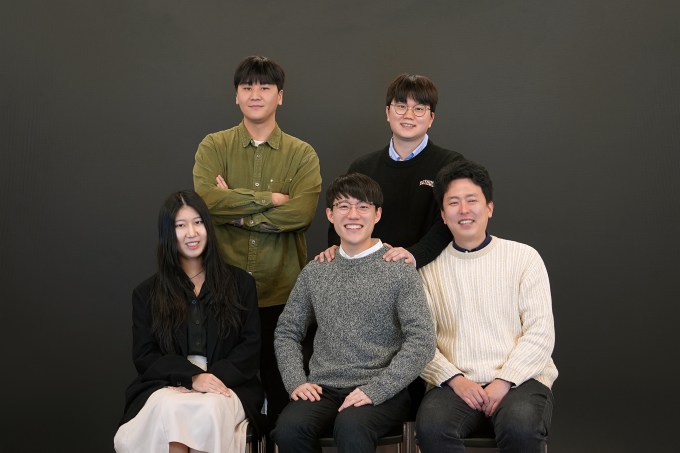
David Kim, CEO of Datumo and a former AI researcher at Korea’s Agency for Defense Development, was frustrated by the time-consuming nature of data labeling so he came up with a new idea: a reward-based app that lets anyone label data in their spare time and earn money. The startup validated the idea at a startup competition at KAIST (Korea Advanced Institute of Science and Technology). Kim co-founded Datumo, formerly known as SelectStar, alongside five KAIST alumni in 2018.
Even before the app was fully built, Datumo secured tens of thousands of dollars in pre-contract sales during the customer discovery phase of the competition, mostly from KAIST alumni-led businesses and startups.
In its first year, the startup surpassed $1 million in revenue and secured several key contracts. Today, the startup counts major Korean companies like Samsung, Samsung SDS, LG Electronics, LG CNS, Hyundai, Naver, and Seoul-based telecom giant SK Telecom among its clients. Several years ago, however, clients began asking the company to go beyond simple data labeling. The 7-year-old startup now has more than 300 clients in South Korea and generated about $6 million in revenue in 2024.
“They wanted us to score their AI model outputs or compare them to other outputs,” Michael Hwang, co-founder of Datumo, told TechCrunch. “That’s when we realized: We were already doing AI model evaluation — without even knowing it.” Datumo doubled down on this area and released Korea’s first benchmark dataset focused on AI trust and safety, Hwang added.
“We started in data annotation, then expanded into pretraining datasets and evaluation as the LLM ecosystem matured,” Kim told TechCrunch.
Techcrunch event
San Francisco
|
October 27-29, 2025
co-founders of datumoImage Credits:Datumo
Meta’s recent $14.3 billion acquisition-like investment in data-labeling company Scale AI highlights the importance of this market. Shortly after that deal, AI model maker and Meta competitor OpenAI stopped using Scale AI’s services. The Meta deal also signals that competition for AI training data is intensifying.
Datumo shares some similarities with companies like Scale AI in pretraining dataset provisioning, and with Galileo and Arize AI in AI evaluation and monitoring. However, it differentiates itself through its licensed datasets, particularly data crawled from published books, which the company says offers rich structured human reasoning but is notoriously difficult to clean, according to CEO Kim.
Unlike its peers, Datumo also offers a full-stack evaluation platform called Datumo Eval, which automatically generates test data and evaluations to check for unsafe, biased or incorrect responses without the need for manual scripting, Kim added. The signature product is a no-code evaluation tool designed for non-developers like those on policy, trust and safety, and compliance teams.
When asked about attracting investors like Salesforce Ventures, Kim explained that the startup had previously hosted a fireside chat with Andrew Ng, founder of DeepLearning.AI, at an event in South Korea. After the event, Kim shared the session on LinkedIn, which caught the attention of Salesforce Ventures. Following several meetings and Zoom calls, the investors extended a soft commitment. The entire funding process took about eight months, Hwang said.
The new funding will be used to accelerate R&D efforts, particularly in developing automated evaluation tools for enterprise AI, and to scale global go-to-market operations across South Korea, Japan, and the U.S. The startup, which has 150 employees in Seoul, also established a presence in Silicon Valley in March.
We’re always looking to evolve, and by providing some insight into your perspective and feedback into TechCrunch and our coverage and events, you can help us! Fill out this survey to let us know how we’re doing and get the chance to win a prize in return!

The Pixel Sense assistant would pull in data from apps like Calendar, Docs and Photos to add more context to responses.

Elon Musk says he’s bringing back Vine — sort of. The X owner announced over the weekend that the company discovered the video archive for the popular short-form video app, thought to have been deleted, and is working to restore user access.
Vine — something of a precursor to today’s TikTok, but with only 6-second-long looping videos — was acquired by Twitter back in October 2012 for $30 million to expand the social media platform’s video ambitions. Unfortunately for Vine creators and fans, the company fumbled the app’s potential and decided to shut down Vine in 2016 by limiting all new uploads. The following year, it was fully discontinued, though a user archive remained for a time.
Despite no longer having an App Store presence, Vine still has a place in the internet’s collective cultural consciousness. Through online compilations of the best Vines uploaded to YouTube, and through the careers of numerous creators who got their start on Vine, the company lives on to some extent, and its content continues to be discovered by new generations.
Musk himself seemed interested in bringing back Vine after acquiring Twitter (now called X) in October 2022. In a poll posted on the social media app, he asked Twitter’s users, “Bring back Vine?” to which nearly 70% responded “yes.” Axios reported at the time that Twitter had devoted some engineers to working on the Vine reboot, but nothing ever came of it.
Grok Imagine is AI Vine!Btw, we recently found the Vine video archive (thought it had been deleted) and are working on restoring user access, so you can post them if you want.— Elon Musk (@elonmusk) August 2, 2025
It’s unclear whether Musk has any ambitions for Vine beyond getting its archive back online, however. In the same post about restoring Vine, he also touted that Grok’s new video-creation feature, Grok Imagine, also available to X Premium+ subscribers, is “AI Vine.” That suggests that his interests in video creation no longer lie with human creativity, but in human-directed AI prompting.
Whether or not Musk will actually deliver on the promise remains to be seen, as the X post could have just been another way to draw attention to Grok AI, rather than being representative of a real effort inside the company to make old Vines available for reposting.
Techcrunch event
San Francisco
|
October 27-29, 2025