The Trump administration has released the remaining handful of files from the government investigation into the assassination of John F. Kennedy.
JFK Files Released: Why Now and Where You Can Find Them

The Trump administration has released the remaining handful of files from the government investigation into the assassination of John F. Kennedy.

American warfighters need jam-proof communications, and the Space Force is planning to spend hundreds of millions to ensure they have them.
As part of that effort, the service established the Protected Tactical Satcom program to build out secure battlefield communications via satellites. The Space Force has already awarded contracts to defense primes Boeing and Northrop Grumman to develop prototype payloads for satellites heading to far-away geostationary orbit.
Now, the program is entering a new phase. On Tuesday, the Space Force awarded five additional contracts for the design and demonstration of purpose-built satellites to provide jam-resistant comms to tactical forces. The winners include previous winners Boeing, Northrop Grumman, Viasat, and Intelsat, plus a relative newcomer: Astranis, a venture-backed startup based in San Francisco. (Intelsat will buy its satellite bus from K2 Space, another venture-backed startup.)
The initial awards are relatively small, totaling $37.3 million combined. But the program has a $4 billion award ceiling, so the winners could sign on to a much more lucrative defense deal.
Each firm will develop its architectures through January 2026. After that, the Space Force will select one design and award an additional contract for the first satellite, with a launch planned in 2028. Additional production awards will be doled out, also in 2028.
The PTS-G contracts are a notable departure from how the military has historically procured geostationary satellites, which have typically had extremely long timelines from contract award to launch, and would cost hundreds of millions to over a billion dollars per spacecraft.
In contrast, the Space Force is clearly trying to leverage the speed of commercial entrants and encourage competition by selecting multiple vendors for the initial phase of the program.
Techcrunch event
San Francisco
|
October 27-29, 2025
“Our PTS-G contract transforms how SSC acquires SATCOM capability for the warfighter,” program executive officer Cordell DeLaPena Jr. said in a news release. “The incorporation of commercial baseline designs to meet military capability significantly enhances the Space Force’s speed and efficiency to add capability to meet emerging threats.”

While a phone line used to be required for internet, that’s not necessarily the case anymore. Dial-up and DSL are the only internet types that require a direct phone line to the home.
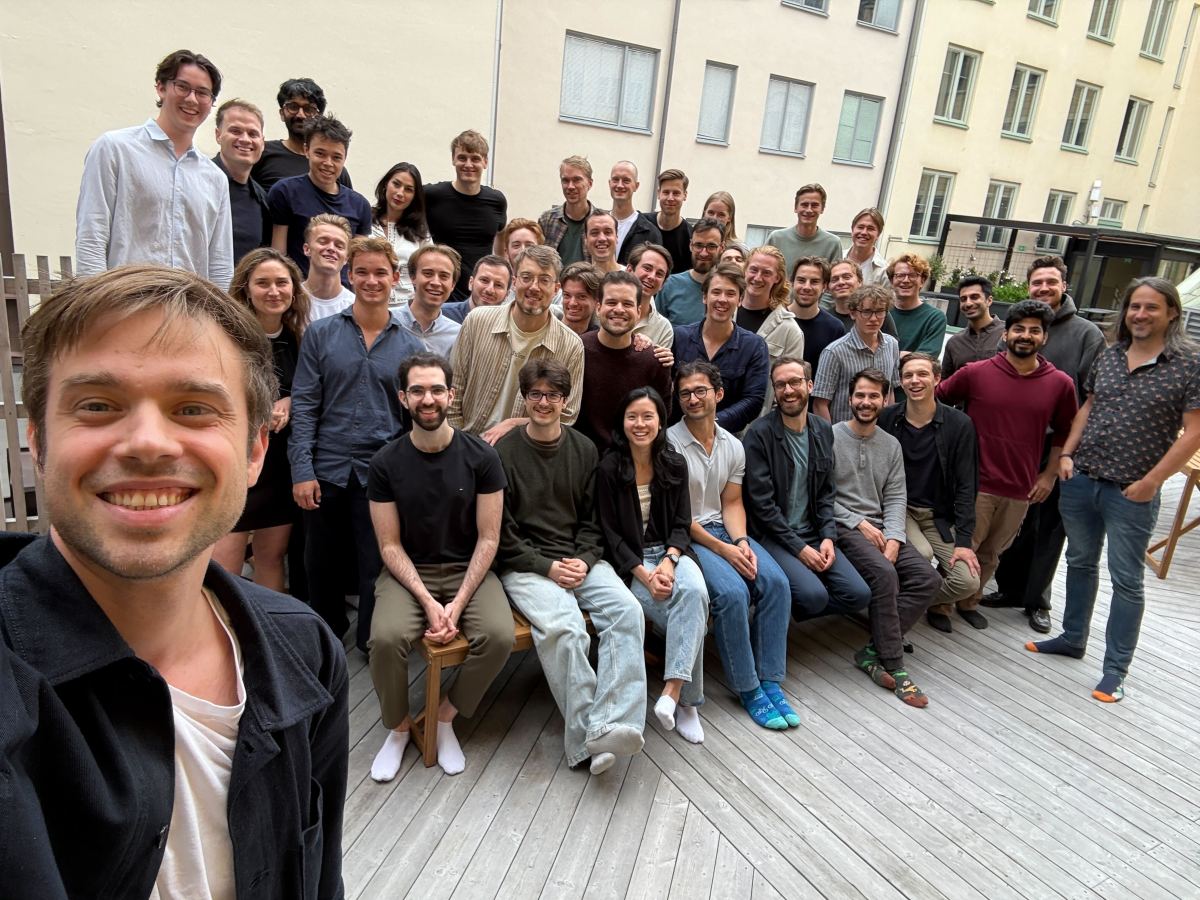
Less than a week after it became Europe’s latest unicorn, Swedish vibe coding startup Lovable is now also a centaur — a company with more than $100 million in annual recurring revenue (ARR).
Lovable took only eight months since its launch to get here, thanks to the skyrocketing popularity of its AI-powered website and app builder. The startup claims it now has more than 2.3 million active users, and last reported 180,000 paying subscribers.
With only 45 full-time employees, and 14 open positions on its careers page, that makes for an impressive employee-to-revenue ratio.
Subscriptions seem to be driving the bulk of Lovable’s revenue, but the company isn’t prioritizing sales at all costs. Shortly after Lovable said it had reached ARR of $75 million in June, its CEO Anton Osika wrote on X that Lovable had “lost $1.5 million ARR in a single day” because it had moved all users on its Team tier to its less expensive Pro tier, which now also accommodates collaboration.
The Teams plan is now being replaced by a Business tier, which sits between the Pro and custom Enterprise offerings. The new plan offers business-focused features such as self-serve, Single Sign-On (SSO), templates, private projects that won’t be visible to the entire team, and the option to opt-out from having your data be used for training.
Lovable already has a slate of large customers like Klarna, Hubspot and Photoroom, but there are still notable barriers and concerns around vibe coding among enterprises — where the big money is. This new tier could help Lovable find intermediary use cases and drive more businesses to use its tools for more than prototyping, which is what the startup says most people use it for today.
This has been one focus for the company, and Osika recently said that businesses were driving significant revenue from projects built with Lovable.
Techcrunch event
San Francisco
|
October 27-29, 2025
The startup says more than 10 million projects have been created on Lovable to date.
The $100 million ARR club isn’t large, especially in Europe, but it is growing thanks to tailwinds from all things AI. In April, Nvidia-backed B2B AI video platform Synthesia, also surpassed that milestone — though it was founded in 2017, not late 2024.