You might be cooking with foods that chip away at your cookware’s coating.
These 4 Foods Are Secretly Destroying Your Cast‑Iron Skillet

You might be cooking with foods that chip away at your cookware’s coating.
I’m always on the lookout for under-the-radar products that might be a good value. Here’s a behind-the-scenes look at how headphone makers do their thing.
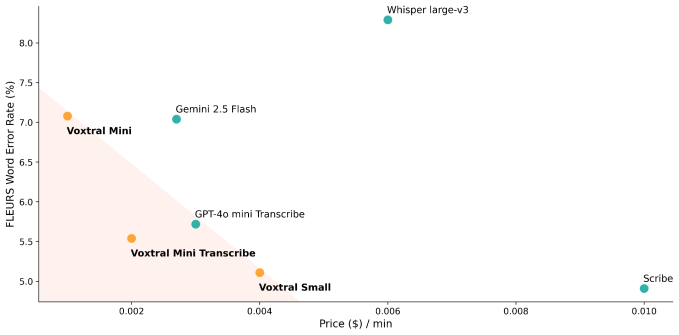
As AI systems become more capable, speech is fast becoming the default way we communicate with machines. French AI startup Mistral has jumped into the audio race with its first open model, aiming to challenge the dominance of walled-off corporate systems with open-weight alternatives.
On Tuesday, Mistral announced the release of Voxtral, its first family of audio models aimed at businesses.
The company is pitching Voxtral as the first open model that’s capable of deploying “truly usable speech intelligence in production.”
In other words, no longer will developers have to choose between a cheap, open system that fumbles transcriptions and doesn’t really understand what’s being said, and one that functions well, but is closed, leaving developers with a higher bill and less control over deployment.
For businesses, that means Voxtral offers an affordable alternative that the company claims is “less than half the price” of comparable solutions.
Image Credits:Mistral
Mistral says Voxtral can transcribe up to 30 minutes of audio. Due to its LLM backbone, Mistral Small 3.1, it can understand up to 40 minutes, allowing users to ask questions about the audio content, generate summaries, or turn voice commands into real-time actions like calling APIs or running functions. Voxtral is also multilingual, with the ability to transcribe and understand languages including English, Spanish, French, Portuguese, Hindi, German, Dutch, and Italian.
The company is offering up two variants of its “speech understanding models”. The first, Voxtral Small, has 24B parameters for production-scale deployments, and is competitive with ElevenLabs Scribe, GPT-4o-mini, and Gemini 2.5 Flash.
Techcrunch event
Boston, MA
|
July 15
The second, Voxtral Mini, has 3 billion parameters for local and edge deployments. There’s also an ultra-cheap, stripped-down, fast API version of the 3B model called Voxtral Mini Transcribe that is optimized for transcription-only use cases and promises to outperform OpenAI Whisper for less than half the price.
Users can try Voxtral for free by downloading the API on Hugging Face or testing the models in Mistral’s chatbot Le Chat. Integrating the API into applications starts at $0.001 per minute, according to the company.
The launch comes a month after Mistral announced Magistral, its first family of reasoning models that work through problems step-by-step for improved reliability.
Mistral, one of the top AI firms in Europe, is well-known for its advocacy pushing open source AI models. Earlier this month, TechCrunch reported that the company is in talks to raise up to $1 billion in equity from investors like Abu Dhabi’s MGX fund.
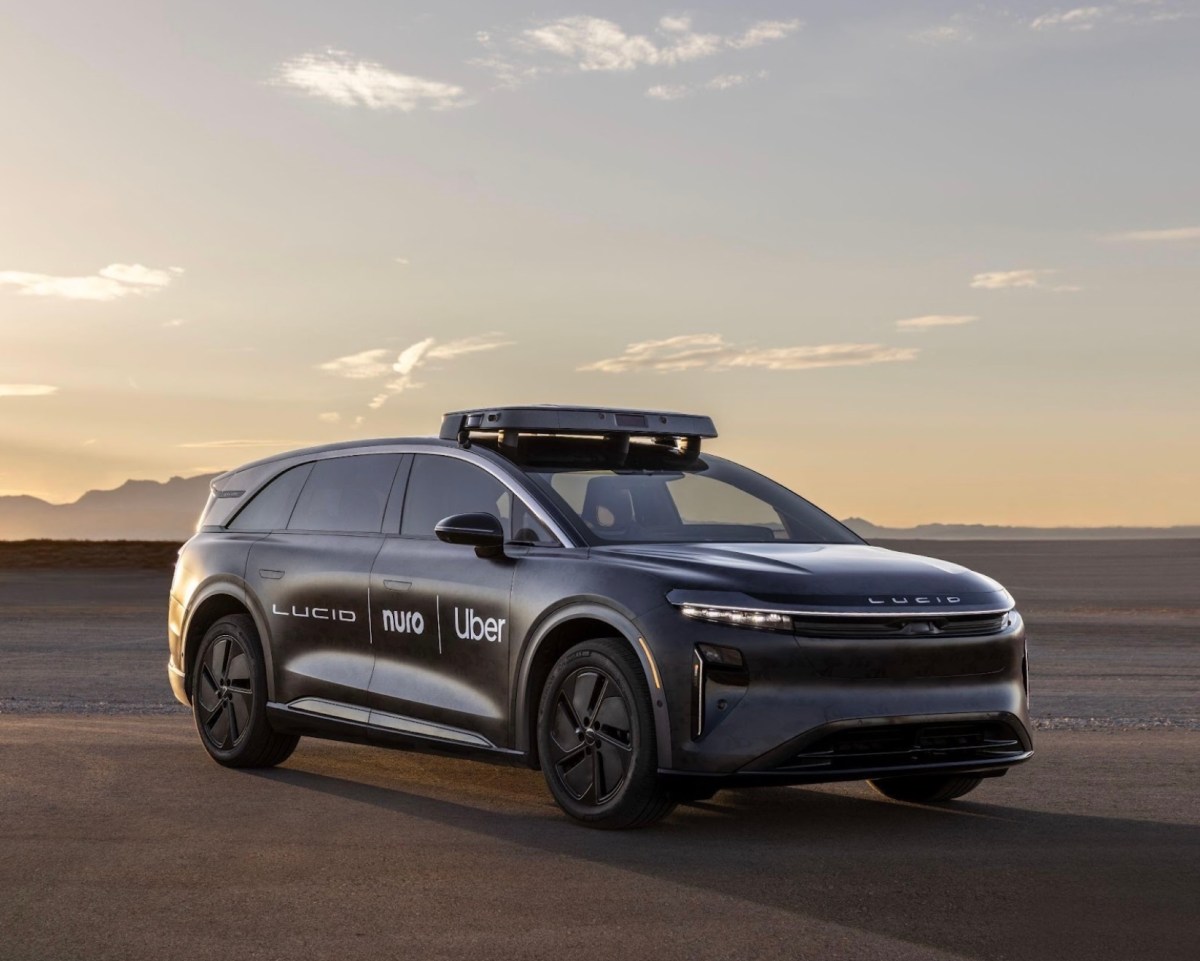
Uber is investing hundreds of millions of dollars into EV maker Lucid and autonomous vehicle technology startup Nuro in a bid to launch its own premium robotaxi service.
Under the deal announced Thursday, Uber will invest $300 million in Lucid and separately buy “at least” 20,000 of the EV maker’s new Gravity SUV over the next six years. Those EVs will be equipped with Nuro’s autonomous vehicle system, and the vehicles will be owned and operated by Uber or its third-party fleet partners. Uber plans to launch a robotaxi service in a major U.S. city next year.
Production of these modified Lucid Gravity vehicles is expected to begin in late 2026, according to a regulatory filing.
Uber is also investing an undisclosed “multi-hundred-million dollar” amount into Nuro. One source familiar with the agreement said the amount is more than Uber’s investment in Lucid.
The agreement between the three companies was a year in the making, Nuro co-founder and president Dave Ferguson told TechCrunch.
“I think that’s probably a reflection of how meaty it is,” he said, adding that Uber was looking to make a very large commitment to a robotaxi program, and spent time with almost every AV company to find the most suitable partner.
“We were thrilled that, at the end of all that, we were the partner that was chosen,” he said.
Techcrunch event
San Francisco
|
October 27-29, 2025
Ferguson said engineers at Lucid and Nuro have already made progress on the project. The companies have been testing a prototype driverless vehicle on a closed track at Nuro’s proving grounds in Las Vegas.
Lucid’s Gravity SUVs are ideal because the vehicles are already equipped with the kind of hardware redundancies required for a Level 3 automated driving system, Ferguson said. (Level 3 is a designation by the Society of Automobile Engineers that allows the driver to take their eyes off the road and hands off the steering wheel in certain conditions.)
The Nuro-equipped Gravity vehicles will be Level 4, which means the vehicle can handle all aspects of driving in certain conditions without human intervention. Still, the added redundancies made it “almost a delight” as Nuro integrated its self-driving system into the vehicles, Ferguson said.
Uber has spent the past two years locking in partnerships with autonomous vehicle technology companies, covering the spectrum of how self-driving systems can be applied to the physical world. The ride-hailing giant has partnered with more than 18 companies globally, across ride-hailing, delivery, and trucking. In this year alone, it has announced deals with Ann Arbor, Michigan-based May Mobility Volkswagen, as well as Chinese self-driving firms Momenta, WeRide, and Baidu.
Uber’s most high-profile partnership in the U.S. — and one that is commercially operating today — is with Waymo. The companies offer a “Waymo on Uber” service in Austin and Atlanta.
This deal illustrates just how much money Uber is willing to invest in hopes of tapping into, and even dominating, the burgeoning autonomous vehicle market.
The agreement is also validation for Nuro, which has raised more than $2 billion from high-profile investors since it was founded in 2016. The startup initially focused on applying its AV tech to a fleet of low-speed, on-road delivery bots, which it had developed. But the company burned through its cash reserves, and after facing difficult capital markets, conducted multiple rounds of layoffs in 2022 and 2023.
Last year, Nuro pivoted its business strategy to focus more on the startup’s core autonomous driving technology. It ditched the low-speed delivery model and set out to license its autonomous vehicle technology to automakers and mobility providers, like ride-hail and delivery companies. The decision to only focus on developing and licensing the AV system allowed Nuro to extend its runway from 1.5 years to 3.5 years, the company said at the time.
But the company still needed a licensing deal to prove its shift. The Uber agreement, along with several others in the works, according to Ferguson, suggests the pivot is paying off.